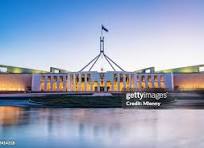
Australian Capital Territory
ACT Energy Prices
Here's the full picture for the ACT — and there are a few things that make Canberra genuinely unique in the Australian electricity market.
The ACT benchmark: the ICRC Reference Price
The ACT has its own regulator — the Independent Competition and Regulatory Commission (ICRC) — which sets the reference price that all retailers must use to advertise their plans. The current ICRC reference price for a typical ACT household on a single-rate tariff using 6,100 kWh/year is $2,675/year. For customers with a controlled load (typically for hot water systems), the reference price is $3,352/year based on annual usage of 8,800 kWh. EcoFlowSolar Choice
Note that ACT households use significantly more electricity than other states — Canberra's cold winters drive higher heating loads, which is reflected in both the higher usage assumption and the higher reference price.
Who are the cheapest right now?
Some of the cheapest electricity rates in Canberra currently belong to Origin, Red Energy, ActewAGL and Energy Locals. A competitive usage rate starts from around 25 cents per kWh and 90–110 cents per day for the supply charge. DHS
ACT households on a flat rate tariff with average energy use could save $437 a year by switching from a standing offer to the cheapest available market deal, according to the AER's December 2025 Market Report. The ACCC has again confirmed that customers on older plans consistently pay more than those on newer ones. Stagelectrical
The gap between the cheapest and priciest single-rate electricity plans available in the ACT can be around $670 a year — so this is absolutely worth your time. Solar Choice
One key ACT fact: ActewAGL is the local incumbent
ActewAGL is the largest energy provider in the ACT, selling electricity and gas to the majority of Canberrans. It's a joint venture between Jemena Ltd, Icon Water Limited and AGL Energy, and has been established for over 100 years. Many Canberrans are on ActewAGL simply because they've never switched — which is exactly the loyalty penalty the ACCC keeps calling out. DHS
Electricity in the ACT is distributed by Evoenergy, while some customers on the outskirts may fall under the Essential Energy network. Evoenergy remains your distributor regardless of which retailer you choose — only the billing company changes when you switch. DHS
The ACT's 100% renewable electricity claim — what it means for you
One genuinely distinctive thing about the ACT: the territory has been sourcing 100% of its electricity from renewable sources under government contracts since 2020. This doesn't mean your physical electrons are from wind or solar, but it does mean all ACT retailers are effectively selling "green" electricity by default — so unlike other states, you don't need to pay a premium for a green energy plan.
How to compare — step by step
- Go to Energy Made Easy (energymadeeasy.gov.au) — the federal government's free independent comparison tool covers the ACT. Enter your NMI from your bill for a personalised comparison, or use Quick Compare with your postcode and estimated usage. Energy & Mining
- Know your usage. ACT households use substantially more electricity than the national average due to cold winters. Your actual annual kWh (on your bill) is the most important input for an accurate comparison.
- Compare by estimated annual cost, not headline rate. Supply charges and usage tiers both affect your total bill significantly.
- Check the ICRC reference price percentage on every plan. Every retailer must show how their plan compares — the further below the reference price, the better.
- Watch conditional vs guaranteed discounts. Pay-on-time discounts vanish if you miss a payment. Always find the unconditional rate as your baseline.
- Read the Basic Plan Information Document (BPID). Check for exit fees and contract length before signing up. Switching is free and supply is never interrupted.
- Compare gas separately. ACT energy providers generally update electricity prices each July or August — if your plan's benefits have rolled over without you noticing, you're likely on a pricier rate. DHS
- Review every 12 months. Discounts often only last for the first 12 months, and your provider might move you to a pricier plan if you don't renegotiate once the benefit period expires. Solar Choice
Solar feed-in tariffs in the ACT
Current feed-in tariffs in the ACT are set voluntarily by retailers, typically between 6c and 12c/kWh in 2025–26. Legacy households that installed solar before 2011 may still receive premium tariffs of 40–50c/kWh until 2031 under the ACT's original gross feed-in tariff scheme — new customers cannot access these rates. If you have solar, comparing feed-in tariff rates alongside usage rates is particularly important. Alinta Energy
Rebates and concessions — the ACT is actually quite generous
The ACT has some of the best government support in the country for eligible households:
- Federal Energy Bill Relief: All ACT households receive two credits of $75 (totalling $150), automatically applied to bills in July and October 2025. Jackery
- Electricity, Gas and Water Rebate: The ACT's main concession. The annual rebate for 2025–26 has been permanently increased by $50 to $800, available to eligible concession card holders including Pensioner Concession Card, Health Care Card, and DVA Gold Card holders. It's applied as a daily rate with a higher winter component, which is especially helpful given Canberra's cold winters. Apply through your retailer. Energy Made Easy
- Life Support Rebate: An annual rebate of $150 for 2025–26, applied as a daily rate of approximately 41 cents per day, for households where a member uses eligible life support equipment prescribed by a medical practitioner. Jackery
- Home Energy Support Program (HESP): Eligible ACT homeowners can access rebates of up to $5,000 to install energy-efficient products including rooftop solar, reverse-cycle heating and cooling, hot water pumps, electric stovetops and ceiling insulation. Eligible concession card holders can receive up to 50% off solar panel installation costs, capped at $2,500. ProductReviewPerth Solar Warehouse
- Sustainable Household Scheme: Eligible households can borrow between $2,000 and $15,000 to invest in energy-efficient goods, including an option for zero-interest loans (though loans from 1 July 2025 attract 3% interest). ProductReview
- Access to Electric Program: Helps ACT customers switch from gas to electric appliances to improve energy efficiency and reduce costs. Worth looking into given Canberra's transition away from gas. ProductReview
The bottom line for the ACT: head to energymadeeasy.gov.au, enter your postcode and your actual annual kWh from your latest bill, and sort by annual cost. With up to $437–$670 potentially on the table from switching, and some of the best government support programs in the country on top of that, it's one of the highest-value comparisons you can do anywhere in Australia.
0 Comments
Log in to leave a comment.