Inflation — Who Really Pays the Price?
What exactly is inflation?
I keep hearing the word inflation at the moment.
It is on the news, in newspaper headlines and, of course, whenever interest rates are being discussed.
But I started wondering something quite simple:
What actually is inflation — and why does it matter so much?
The easiest way I can explain it is this.
Imagine you could buy your normal weekly groceries for $100.
Then, a year later, exactly the same basket of groceries costs $103.50.
Your groceries have gone up by 3.5 per cent.
That is inflation.
It doesn't mean that everything has gone up by exactly 3.5 per cent. Some things may have gone up considerably more, some less, and some might even have become cheaper.
The Consumer Price Index, or CPI, is the measure used to track the overall change in prices paid by households for a broad basket of goods and services.
The latest Australian figures available as I write this show CPI inflation was 3.5 per cent in the year to July 2026, down from 3.8 per cent in June. Housing was up 5.0 per cent and food and non-alcoholic beverages were up 3.2 per cent.
That 3.5 per cent figure might not sound enormous.
But there is something important to remember.
Inflation doesn't put prices back down
Suppose something cost $100 and inflation pushed it to $103.50.
If inflation then falls from 3.5 per cent to 2 per cent, the price doesn't normally go back to $100.
It just means that prices are now rising more slowly.
That distinction is easily overlooked.
Lower inflation doesn't necessarily mean lower prices.
It means the rate at which prices are increasing has slowed.
And this is why inflation matters.
So why is the RBA so concerned about it?
The Reserve Bank of Australia has a target of keeping consumer price inflation between 2 and 3 per cent over the medium term.
The reason is fairly straightforward. When inflation is high and persistent, the purchasing power of money falls.
Your wages may increase, but if your rent, electricity, food, insurance, fuel and other expenses are increasing faster, your purchasing power falls.
In simple terms:
You can buy less with the same amount of money.
The RBA is also concerned that high inflation can become embedded. If workers expect prices to keep rising, they may seek higher wages. Businesses facing higher costs may increase their prices, and the cycle can continue.
The RBA's August 2026 assessment was that inflation remained too high and that spending in the economy would need to slow for inflation to return to target.
And this is where the story gets complicated.
But what if the cause of inflation is overseas?
This is something I hadn't really thought about before.
Not all inflation is caused by Australians going out and spending too much money.
Sometimes something happens somewhere else in the world and the consequences eventually arrive here.
And one of the biggest examples is fuel and energy.
Australia is a major energy producer and exporter, but Australian households and businesses are still affected by global energy prices and international supply disruptions.
The current conflict in the Middle East is a good example. The RBA says the conflict has disrupted energy production and shipping and contributed to high and volatile global prices for oil and other commodities. It says these higher energy and input costs are contributing to inflation in Australia.
And this isn't simply about what we pay at the petrol bowser.
Think about a truck delivering food to a supermarket.
If diesel becomes substantially more expensive, the transport company has higher costs.
The farmer has higher costs for machinery and transport.
The manufacturer has higher costs moving raw materials.
The supermarket has higher delivery costs.
Eventually some of those higher costs can find their way into the price of food and other goods and services.
The latest ABS figures show just how quickly fuel prices can move. Automotive fuel prices rose 7.5 per cent in July 2026 alone, with higher world oil prices and the partial unwinding of fuel-excise relief contributing to the increase.
And this raises a question for me:
If inflation is partly being caused by events overseas, how much can raising Australian interest rates actually fix?
The RBA cannot produce more oil.
It cannot control the world price of crude.
And it cannot reopen an international shipping route.
What it can do is influence what happens here in Australia — particularly spending and demand — and try to prevent a temporary external shock from becoming persistent domestic inflation.
So the RBA raises interest rates
This is the part most of us notice.
When inflation remains too high, the RBA can increase the cash rate.
The idea is fairly straightforward.
Higher interest rates mean borrowing becomes more expensive.
Mortgage repayments rise.
Businesses face higher borrowing costs.
People have less money left to spend.
And when there is less spending in the economy, businesses may find it harder to keep increasing their prices.
That is part of how monetary policy is supposed to bring inflation down.
The RBA has increased the cash rate three times in 2026 and, at its August meeting, left it at 4.35 per cent. The Bank said the increases had tightened financial conditions and that it needed to assess how the economy was responding.
But this is where I started asking another question.
What about fixed and variable mortgages?
This is something I have realised while writing this.
For years, I had assumed that when somebody took out a mortgage, the term of the loan and the interest rate were effectively tied together.
In my mind, if someone borrowed money for, say, 20 or 25 years at 5 per cent, that was what they had agreed to — a 20- or 25-year loan at 5 per cent.
I now understand that, in Australia, those are two different things.
You can have a 25-year mortgage, but the interest rate may only be fixed for three or five years.
Moneysmart explains that a fixed interest rate normally stays the same for a set period, usually one to five years. During that period, repayments don't change even if market interest rates rise or fall. When the fixed period ends, the loan will usually move to the lender's variable rate unless the borrower changes the loan or agrees to another fixed period.
A variable-rate loan is different. The rate can change over the life of the loan.
And suddenly I realised something:
The borrower may commit themselves to the debt for twenty or thirty years, while the price of that money can change underneath them.
That was really the thought that started me on this whole line of questioning.
I began thinking:
Hang on. If I borrow money for twenty or twenty-five years, why should the cost of that money keep changing while I am paying it back?
I understand now why variable mortgages work this way.
But it still raises a question for me:
When did the borrower become the one carrying so much of the interest-rate risk?
And who feels the change first?
With a variable-rate mortgage, the effect can be felt relatively quickly when the bank passes on an increase in the cash rate.
With a fixed-rate mortgage, the borrower is protected from market-rate changes during the fixed period.
But the protection eventually expires.
When the fixed period ends, the loan will normally revert to the lender's variable rate unless the borrower refinances or fixes the loan again. That can produce a substantial jump in repayments.
This happened to many Australians after the very low fixed rates offered during the pandemic expired.
So even a borrower who thought they had insulated themselves from rate rises could eventually find themselves facing a much larger repayment.
For most Australian borrowers today, however, variable rates are the more important story because the share of outstanding housing loans on fixed rates has fallen to a very small proportion. The RBA says it was below 5 per cent in 2025.
And that brings me to the question that really started bothering me.
Why should ordinary borrowers carry so much of the burden?
Imagine someone with a variable-rate mortgage.
They took out their loan several years ago.
They have been paying it faithfully every month.
Then the RBA increases the cash rate.
The bank increases the interest rate on the mortgage.
And the borrower's monthly payment goes up.
The borrower has not borrowed another dollar.
But they are now paying more for the money they borrowed previously.
Where does that extra money go?
It goes to the bank as additional interest income.
Now, I don't think it would be fair simply to say that every extra dollar paid by a borrower becomes profit for the bank.
Banks have costs of their own.
They fund their lending through deposits, debt and equity, and their funding costs also move with interest rates. The RBA says major banks obtain about two-thirds of their funding from deposits, almost one-third from debt and less than one-tenth from equity. It also says lending rates have broadly followed the cash rate, while bank funding costs have also risen.
So there is a genuine cost to the bank.
But I still found myself asking:
How much of the additional interest paid by millions of borrowers ultimately becomes additional profit for the banks?
That, to me, is a reasonable question.
And then I looked at the profits
The figures are certainly large.
Commonwealth Bank reported $10.911 billion in statutory net profit after tax for FY2026.
Now, I'm not suggesting that all of that $10.9 billion came from mortgage borrowers.
It didn't.
CBA has millions of customers and a large range of businesses, including business lending, deposits, credit cards, insurance and other financial services.
But seeing a figure like $10.9 billion certainly made me stop and think.
Especially when, at the same time, an ordinary mortgage holder is being told:
“Interest rates have to go up because inflation is too high.”
And that leads me to another question.
Was it always like this?
This is something I wanted to look at more closely.
CBA made billions of dollars in profit even during years when Australian inflation was relatively low and stable.
So perhaps the interesting question isn't simply:
“Are higher interest rates good for banks?”
It is:
“How do bank profits, lending margins and interest rates actually move together?”
The RBA publishes data on bank funding costs, lending rates and net interest margins precisely because these things are not quite as simple as looking at the mortgage rate alone. Its latest analysis says bank net interest margins remained around historical lows in 2025, even though estimated lending spreads increased during early 2026.
That is worth understanding before we reach any conclusions.
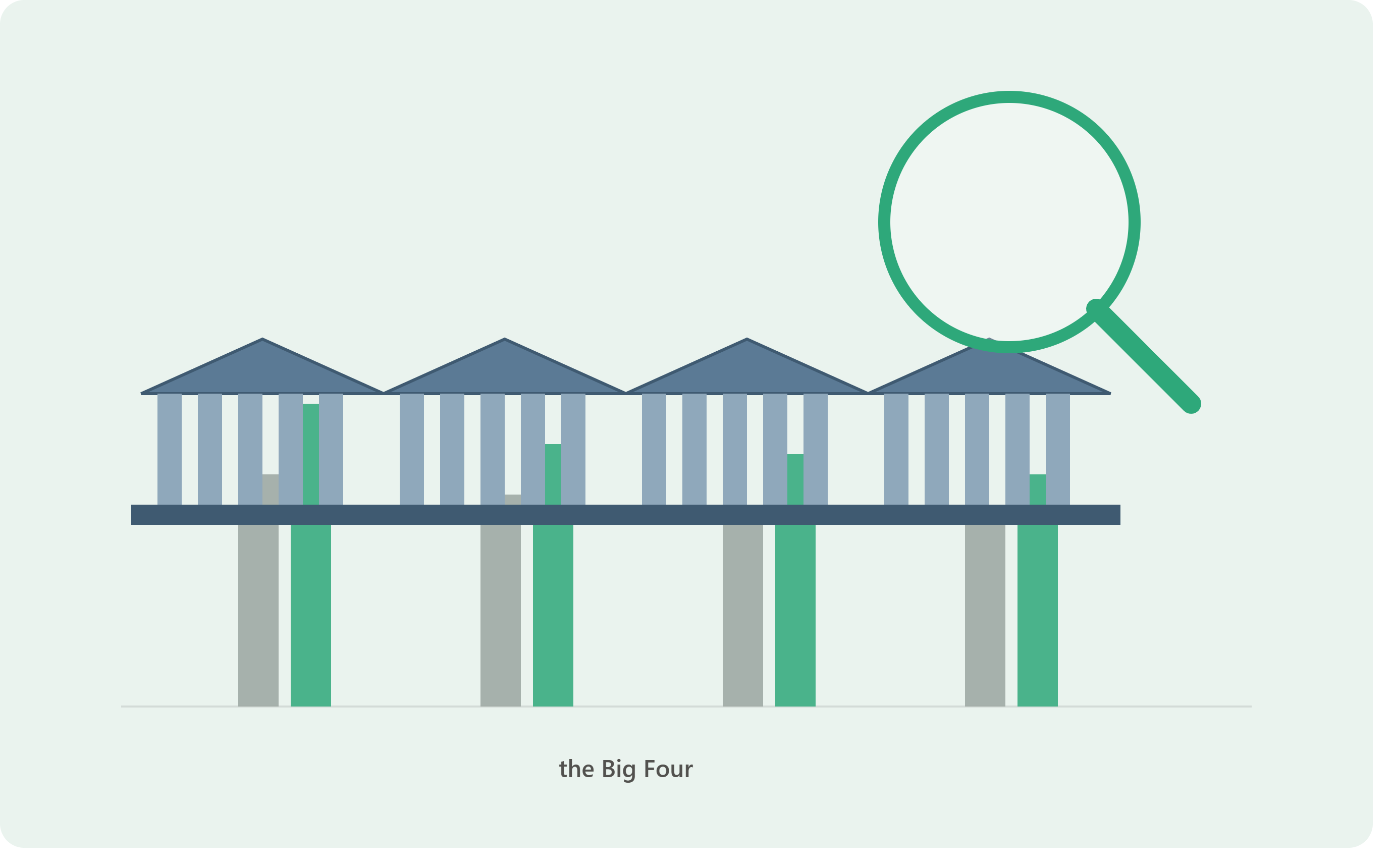
So I looked at the Big Four
I had been looking at Commonwealth Bank's figures, but then I thought:
Hang on — CBA isn't the only big bank.
What happens if we look at all four?
I compared their reported 2019 financial years — before the recent period of rapidly rising interest rates — with their 2025 financial years.
Commonwealth Bank
Profit: $8.57bn → $10.13bn
Net interest income: $18.12bn → $24.02bn
Westpac
Profit: $6.78bn → $6.92bn
Net interest income: $16.91bn → $19.38bn
NAB
Profit: $4.80bn → $6.76bn
Net interest income: $13.56bn → $17.40bn
ANZ
Profit: $5.95bn → $5.89bn
Net interest income: $14.34bn → $17.96bn
All four banks together
Combined profit: $26.11bn → $29.70bn
Combined net interest income: $62.92bn → $78.76bn
The figures are quite striking.
The four banks' combined net interest income increased by about $15.8 billion, while their combined statutory profits increased by about $3.6 billion.
That doesn't mean the extra interest simply became profit. Banks have substantial costs of their own, including interest paid to depositors and other funders, staff, technology, bad debts, taxes and other expenses.
But it does tell us something.
A very large amount of additional interest income was flowing through the four major banks.
And that left me asking the question I had started with:
When the RBA raises interest rates and millions of homeowners pay more on their mortgages, how much of that additional money eventually finds its way into bank profits?
Where does all the extra interest go?
This was the question I really wanted to answer.
Take Commonwealth Bank.
In 2019, CBA reported interest income of about $34.6 billion and interest expense of about $16.5 billion, leaving net interest income of $18.12 billion.
By 2025, its interest income had risen to about $65.1 billion, while interest expense had risen to about $41.1 billion.
That sounds enormous.
But it shows us something important.
The bank wasn't keeping the whole increase.
A very large amount of that interest expense was paid to depositors and other sources of funding.
CBA's 2025 annual report shows total interest income of $65.11 billion, interest expense of $41.087 billion and net interest income of $24.023 billion.
So the money flow is rather more complicated than:
Borrower pays more → bank pockets the whole lot.
It is more like:
Borrower pays more → bank receives interest → bank pays interest to depositors and other funders → other costs are incurred → the remainder becomes net interest income → some of that ultimately contributes to profit.
And I think that distinction is important.
But some of it does end up in profit
This is where I come back to my original thought.
I'm certainly not going to claim that all the extra interest paid by homeowners becomes bank profit.
The figures clearly don't support that.
But net interest income is a major part of a bank's income, and after the bank has met its other expenses, some of that income ultimately contributes to the profits reported to shareholders.
CBA's latest result gives us an idea of the scale: $25.586 billion of net interest income and $10.911 billion of statutory profit in FY2026.
So my question wasn't completely unreasonable.
It was just more complicated than I first thought.
When interest rates rise and millions of homeowners pay more on their mortgages, how much of that additional burden ultimately contributes to bank profits?
I think that's a reasonable question to ask.
So who really pays the price?
And perhaps this is the question I should have started with.
When inflation rises, everybody can feel it.
The retiree feels it when groceries go up.
The family feels it when the electricity bill arrives.
The renter feels it when the rent is increased.
The motorist feels it at the petrol pump.
The business feels it through higher wages, transport and operating costs.
And the homeowner with a variable mortgage feels it when the RBA raises interest rates.
But those costs don't necessarily fall equally on everybody.
Someone without a mortgage doesn't feel an interest-rate increase in the same way as someone with a large variable loan.
A person with substantial savings may actually receive more interest income when rates rise.
And a bank receives interest from borrowers while also paying more to some of its depositors and other funders.
So perhaps the real question isn't simply:
“How do we beat inflation?”
Perhaps it is:
“When we use higher interest rates to fight inflation, who carries the greatest part of the cost?”
And that's where I find myself thinking about the ordinary borrower.
We are told that higher interest rates are necessary to bring inflation down.
I understand the theory.
I understand that banks have costs of their own.
And I understand that not every dollar of additional mortgage interest becomes bank profit.
But I also understand what it feels like when a mortgage repayment rises and that money has to come from somewhere else in the household budget.
And when I started looking into all of this, I realised something else.
Inflation doesn't affect everybody equally.
The original inflation may come partly from Australia and partly from things happening overseas.
The treatment may be higher interest rates.
And the person who feels that treatment most directly may be the household with a large variable mortgage.
So perhaps the question isn't simply whether raising interest rates works.
Perhaps we should also ask:
Who pays the price while it is working?
And perhaps there is an even bigger question behind all of this:
If some of the original inflation is being caused by global fuel and energy prices, and the treatment for it is higher interest rates, who really pays the price for curing it?
That is something I am still trying to understand.
What do you think?
0 Comments
Log in to leave a comment.