One Rent Increase a Year — But How Much?
I've been writing quite a bit lately about affordable housing, and the more I look into the subject, the more questions I seem to have.
One of those questions concerns the rules around rent increases in Queensland.
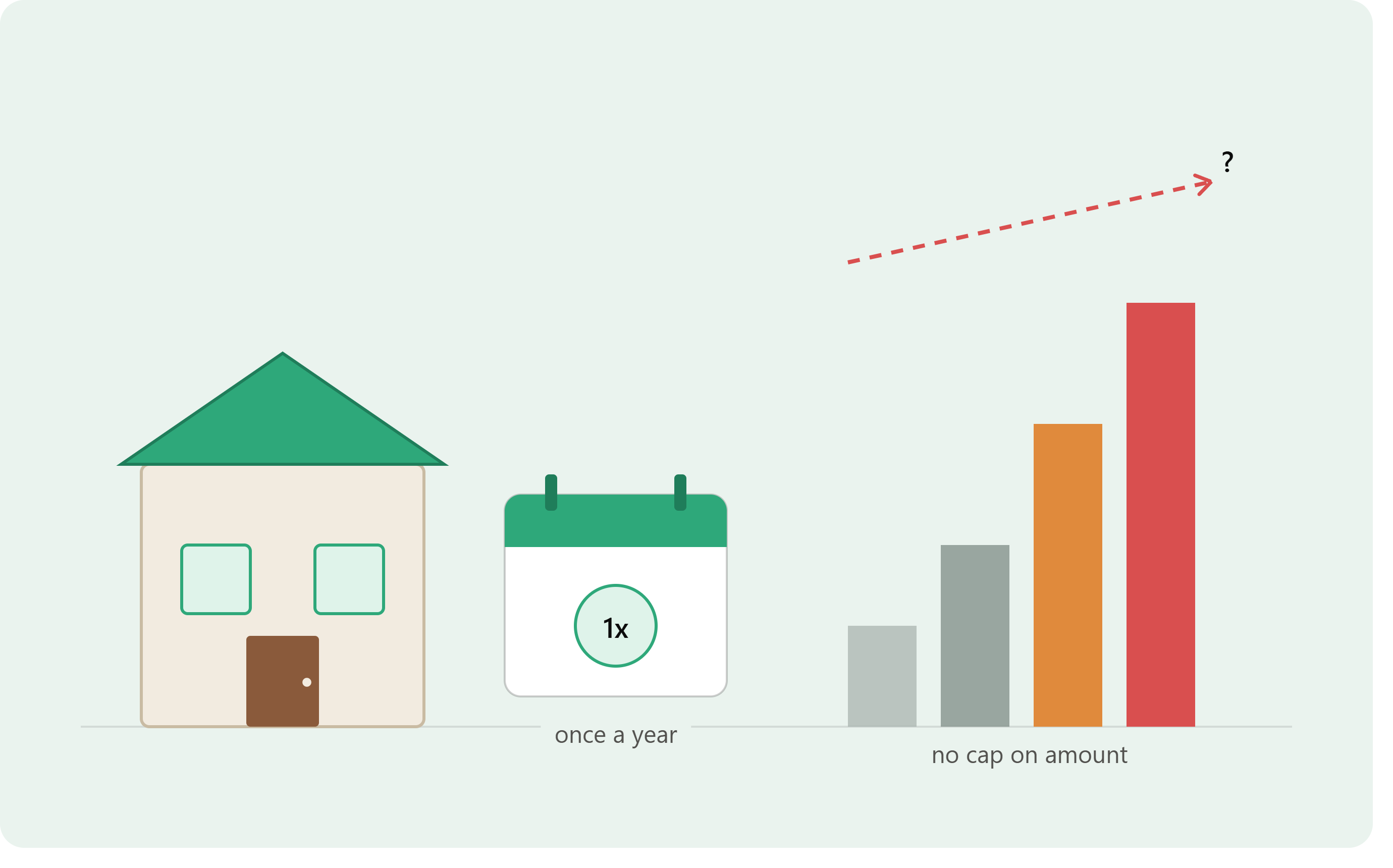
Since July 2023, Queensland has restricted rent increases to once every twelve months. From June 2024, that rule was strengthened so that the twelve-month period applies to the property rather than starting again whenever a new tenant moves in.
At first glance, that sounds quite reasonable.
But then I asked myself: once a landlord is allowed to increase the rent, is there any limit on how much they can increase it?
As far as the general Queensland rules are concerned, there is no simple percentage or dollar cap. The restriction is principally on the frequency of the increase. However, a tenant can challenge an increase they believe is excessive, with QCAT able to consider factors such as comparable market rents, the size of the increase, the condition of the property and the length of the tenancy.
When our lease was coming to an end, I thought it was an opportunity to try to get back to Redcliffe Peninsula, where I had lived for more than twenty years before COVID changed so much for so many people.
We looked at a number of properties.
What surprised me was seeing properties advertised at one rent, only to find that the rent was scheduled to increase after a relatively short period.
One property we were interested in was advertised at $615 a week, but we were told that after six months the rent would rise to $715.
That's another $100 a week. $5,200 a year.
I found myself asking a very simple question:
Is that fair?
The rental bond
There is another part of renting that I find interesting — the bond.
Our new rent meant that our bond had to increase by another $200 because Queensland's maximum bond for a general tenancy is four weeks' rent.
We now have $2,200 tied up as a rental bond.
That money belongs to us, subject of course to any legitimate claim at the end of the tenancy, but while it is held by the RTA it does not earn interest for us. Queensland law specifically provides that nobody other than the State has a legal or beneficial entitlement to interest earned on rental bonds.
I started doing a little mental arithmetic.
There are 92 rental properties in the complex where we live. At an average rent of about $550 a week, a four-week bond would be around $2,200 per property.
92 × $2,200 = $202,400.
That's roughly $200,000 of tenants' money tied up in bonds in just one complex.
The $202,400 calculation is an estimate based on the average rent I have assumed.
And this is only one complex.
I'm not suggesting anybody is doing anything wrong with that money. The RTA is a statutory authority and the bond system exists to protect both tenants and property owners. But I do wonder whether there is a better way of handling such a large pool of tenants' money.
Another state, another idea
Since writing this article, I've come across an interesting development in New South Wales.
The NSW Government has introduced Smart Rental Bonds, allowing renters to transfer an existing bond directly to their next rental property rather than finding thousands of dollars for a second bond while waiting for the first one to be returned. The scheme became available across NSW on 16 September 2026.
There is, however, a $25 administration and processing fee for using the service. The NSW Government says the fee covers the administration of the scheme.
And that got me thinking.
Why should a tenant have to pay anything to transfer a bond that is already being held by the government?
I understand that administering a system costs money. Twenty-five dollars isn't going to make or break most people.
But it does seem rather ironic.
The whole purpose of the scheme is to make moving house more affordable by avoiding the need to find a second bond.
So perhaps the question is whether there could be a way of doing it without adding another cost to the tenant.
And what about Queensland?
Queensland does allow a bond to be transferred in some circumstances, but the same landlord or property manager must remain involved and the bond amount cannot change. There is currently no statewide portable-bond scheme like the one now operating in New South Wales.
Having recently tried to move ourselves, I know just how useful such a system could be.
Why isn't it the same across Australia?
“Why don't we have the same rules throughout Australia? We are one country.”
The answer is that residential tenancy law is largely a state and territory responsibility, so the rules differ.
And interestingly, Queensland is not unique in having a 12-month frequency limit. Victoria and South Australia also have rules generally limiting rent increases to once every 12 months. The exact rules, however, differ between states and territories.
But perhaps the bigger question is not how often a landlord can increase the rent.
Perhaps it is whether the system gives enough protection to the person who has no choice but to keep renting.
I'm fortunate in many ways. Karen and I have a home, and we have signed another lease. We can manage the increase.
But not everyone is in that position.
What worries me is what happens to people whose income simply cannot rise at the same rate as their rent.
A $50 increase might sound manageable when discussed as a percentage or a figure on a government report. But over a year it is $2,600. Over several years, these increases add up.
And when you're retired, you can't necessarily go out and earn another few thousand dollars a year to make up the difference.
That, to me, is the real affordable-housing problem.
We talk about houses, investors, landlords, developers, banks and governments.
But somewhere in the middle of all that discussion is the person who simply wants somewhere safe and affordable to call home.
Sources
Queensland RTA — Rent increases
Queensland RTA — Rent increases
Queensland RTA — New rental laws commenced 6 June 2024
Queensland RTA — New rental laws
Queensland RTA — Rental bonds
Queensland legislation — Residential Tenancies and Rooming Accommodation Act 2008
Consumer Affairs Victoria — Rent increases
Consumer Affairs Victoria — Rent increases
SA.GOV.AU — Rent increases
0 Comments
Log in to leave a comment.