Twenty Years to Fix Housing — What Are We Supposed to Do Until Then?
I read an ABC report recently about evidence given to a Senate inquiry by NAB chief economist Dr Sally Auld.
What caught my attention wasn't simply the suggestion that Australia's housing problems could take the better part of a generation to resolve.
It was something much more basic:
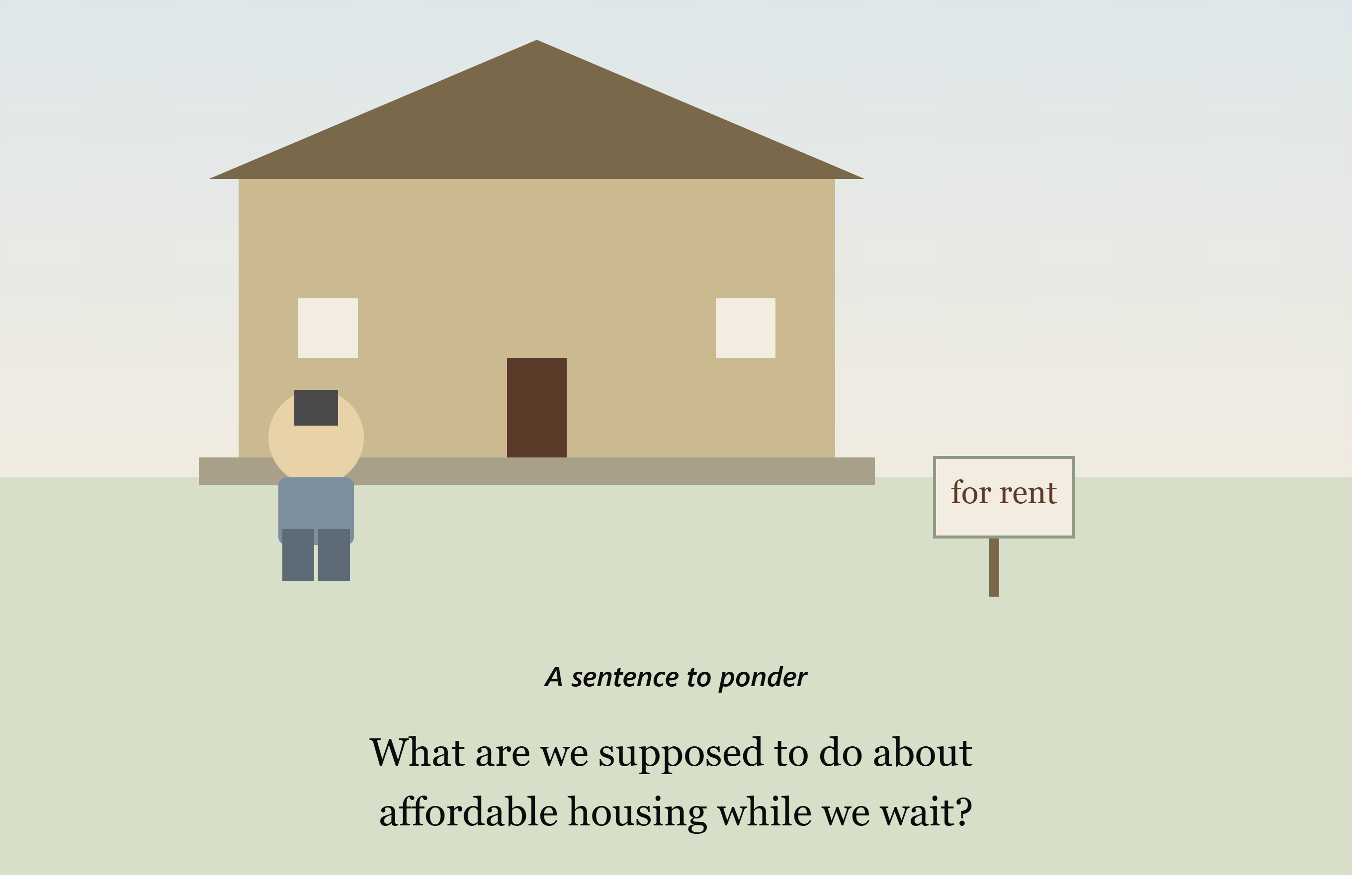
What are we supposed to do about affordable housing while we wait?
Twenty years.
If it really could take that long to fix Australia's housing shortage, what happens to today's renters — particularly people who are already retired or approaching retirement — during those twenty years?
I am not twenty years younger. Neither are millions of other Australians.
I've been writing recently about superannuation, mortgages and the cost of renting. The more I look at the situation, the more I wonder whether we have allowed housing to become something primarily to be invested in rather than simply something people need to live in.
NAB has pointed to several reasons why housing has become so expensive, including house prices rising much faster than incomes, lower interest rates, taxation settings and strong demand.
I don't pretend there is one villain responsible for all of this.
Developers build. Banks lend. Governments make the rules.
But when all three parts of the system are operating within a framework in which housing costs can run so far ahead of people's incomes, perhaps we should stop asking which group is to blame and start asking whether the system itself needs changing.
And then there are the other forces at work
Interest rates are obviously part of the housing story.
The Reserve Bank has been using higher interest rates to try to bring inflation under control, and that has a direct effect on households with variable-rate mortgages. The RBA's cash rate reached 4.35 per cent in May 2026 after three increases earlier in the year, and it remained at 4.35 per cent at the August meeting.
I understand why the Reserve Bank does this. Inflation has to be controlled, and interest rates are one of the tools available to it.
But interest rates are only part of the picture.
Governments also change the rules around property investment. From 1 July 2027, the Federal Government is changing negative-gearing and capital-gains-tax arrangements for residential property. Negative gearing will be limited to new builds, subject to exemptions and transitional arrangements, while the existing 50 per cent CGT discount will be replaced by cost-base indexation and a 30 per cent minimum tax rate for the relevant taxpayers.
These are big changes, and no doubt there are arguments for and against them.
But there is a problem that I keep coming back to.
People need somewhere to live while the market sorts itself out.
Telling somebody approaching retirement that Australia's housing shortage might take the better part of a generation to fix doesn't solve the rent they have to pay next week.
And that is where I find myself today.
I am quite happy renting. I have rented for many years and have no great desire to return to owning a home.
What concerns me is the steady rise in the cost of doing so.
Our rent has risen from $450 a week to $550 a week in just three years. That's an extra $100 every week, or $5.200 a year.
At some point, a person's income simply cannot keep pace with the price of housing.
And that is where the problem becomes very real. It isn't an economic statistic on a page any more. It is money that has to come out of our household income every single week.
That isn't a problem confined to people trying to buy their first home. It affects renters, families, older Australians and people who have reached retirement after a lifetime of working.
So when I hear that it may take twenty years to sort out Australia's housing shortage, I have to ask:
What are we supposed to do until then?
Waiting twenty years may be a perfectly reasonable answer from an economic point of view.
But twenty years is a very long time in a person's life.
Especially when you're already living it.
0 Comments
Log in to leave a comment.